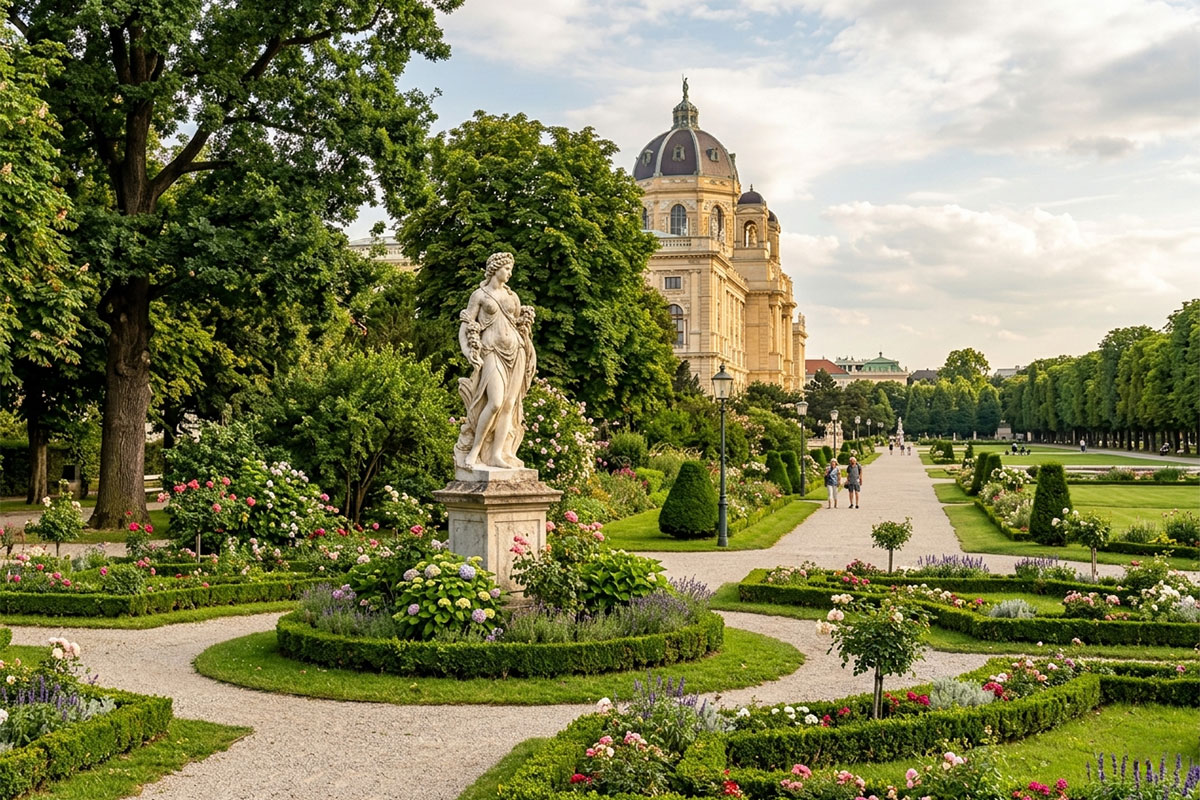
Vienna is often celebrated for its imperial architecture and coffee house culture, but there is a quieter, equally majestic narrative written in stone and bronze across its green spaces. When you step into the city’s parks, you aren't just entering a recreational area; you are stepping into an open-air gallery where nature and art have been engaged in a centuries-long dialogue. The placement of sculptures in Vienna is rarely accidental; each statue, fountain, and monument is carefully positioned to interact with the foliage, the light, and the changing seasons. For the thoughtful traveler, a walk through these gardens offers a unique perspective on Austrian history, mythology, and the romantic appreciation of the natural world.
The interplay between the manicured landscapes and the rigid permanence of marble creates a tension that is visually arresting. Whether it is a mythological figure emerging from a hedge or a composer immortalized in bronze under the shade of a weeping willow, these installations enhance the beauty of the surrounding flora. As we explore the capital in 2026, these timeless guardians of the gardens continue to tell stories of emperors, muses, and the artistic soul of the city. This exploration requires a slower pace, inviting you to look beyond the obvious and appreciate the subtle craftsmanship that defines Vienna’s outdoor aesthetics.
The Baroque Grandeur of Schönbrunn Palace Gardens
The gardens of Schönbrunn Palace represent the pinnacle of Baroque landscape architecture, where order and symmetry reign supreme. Here, the sculptures are not merely decorative add-ons; they are integral components of the garden's grand design, intended to glorify the Habsburg monarchy through mythological allegories. Walking along the Great Parterre, visitors are flanked by 32 larger-than-life statues that seem to guard the path toward the Gloriette. These figures, sculpted by various artists in the 18th century, largely depict scenes from history and mythology, serving as a testament to the educational and cultural aspirations of the era.
At the foot of the hill lies the crowning jewel of the garden's sculptural elements: the Neptune Fountain. This massive installation is a theatrical display of art in nature, depicting the sea god Neptune commanding his aquatic retinue. The water features are designed to create a visual link between the palace and the hill, while the sculptures themselves are rendered with dynamic energy. The horses seem to struggle against the water, and the tritons blow their conch shells in eternal silence. It is a masterclass in using sculpture to control the viewer's gaze, drawing the eye upward through the landscape.
- The Great Parterre Statues: A collection of 32 figures representing virtues and mythological tales.
- The Neptune Fountain: A dramatic centerpiece symbolizing dominion over the seas.
- The Roman Ruin: An artificial ruin built in 1778, designed to evoke the heroic past and the inevitability of nature reclaiming art.
- The Obelisk Fountain: Represents stability and permanence, inscribed with hieroglyphs that tell the history of the Habsburg dynasty.
Belvedere Gardens: A Mythological Ascent
Moving from the imperial grandeur of Schönbrunn, the Belvedere Gardens offer a different narrative, one based on the concept of a journey from the underworld to Olympus. The garden connects the Lower and Upper Belvedere palaces and is designed as a tiered landscape where sculptures guide the visitor's ascent. The most iconic figures here are undoubtedly the Sphinxes. These mythical creatures, with the body of a lion and the head of a human, flank the pathways and offer a sense of enigmatic protection. Their expressions are varied—some stern, some serene—adding a layer of mystery to the structured baroque hedges.
The integration of water basins and cascading fountains adds a fluid element to the rigid stone sculptures. As you walk from the Lower Belvedere upwards, the sculptures change in theme, becoming more celestial and triumphant. This progression was intentional, designed to mirror the rise of the garden's patron, Prince Eugene of Savoy. The sculptures here do not just sit in nature; they command it, turning the simple act of walking up a hill into an allegorical journey through classical mythology.
The Symbolism of the Sphinxes
The Sphinxes of Belvedere are particularly captivating because they bridge the gap between the wild and the civilized. In the 18th century, these figures represented wisdom and strength, qualities the aristocracy wished to project. Today, they serve as perfect subjects for photography, especially when the soft morning light casts long shadows across the gravel paths. Their weathered stone surfaces contrast beautifully with the vibrant seasonal flowers planted in the parterres, highlighting the enduring relationship between art and the ephemeral nature of the garden.
Stadtpark: Where Music Meets Marble
While the palace gardens focus on mythology and power, the Stadtpark (City Park) is a tribute to Vienna’s cultural soul: music. This park was Vienna's first public park, and its design feels more organic and accessible than the rigid palace grounds. The sculptures here are intimate, placed among clusters of trees and winding paths rather than in grand, open formations. The most famous resident is undoubtedly the golden statue of Johann Strauss II. Framed by a white marble arch and surrounded by trees, the gilded bronze figure of the "Waltz King" playing his violin is an image that resonates with the city's musical heritage.
However, the park is home to many other artistic luminaries. As you wander through the winding paths, you encounter monuments dedicated to Franz Schubert, Franz Lehár, and Anton Bruckner. These sculptures are often depicted in relaxed poses, sitting or standing as if they are composing their next masterpiece amidst the rustling leaves. The setting makes the art feel approachable; visitors often sit on nearby benches, sharing a quiet moment with these stone giants of music history.
| Garden / Park | Key Sculpture | Theme & Atmosphere | Best Viewing Condition |
| Schönbrunn Palace | Neptune Fountain | Imperial power, Mythology, Grandeur | Mid-day for full sunlight on the water |
| Belvedere Gardens | The Sphinxes | Mystery, Ascent, Baroque order | Golden hour for dramatic shadows |
| Stadtpark | Johann Strauss Monument | Musical heritage, Romantic, Gilded | Spring/Summer when flowers surround the arch |
| Volksgarten | Theseus Temple | Classical Antiquity, Tragedy, Silence | Overcast days for a moody, white-marble contrast |
| Burggarten | Mozart Statue | Genius, Intimacy, Relaxation | Afternoon, framed by the green lawn |
The Volksgarten: Tragedy and Classical Beauty
The Volksgarten offers a solemn and classical aesthetic that differs significantly from the playful nature of the Stadtpark. Dominated by the stunning Theseus Temple, a smaller-scale replica of the Temple of Hephaestus in Athens, this garden brings ancient Greece to the heart of Vienna. The temple itself is a massive sculpture of architecture, standing stark and white against the lush green backdrop of the park's famous rose gardens. It was originally built to house a single statue by Antonio Canova, emphasizing how architecture was often constructed specifically to serve sculpture.
Hidden away in a quieter corner of the Volksgarten is the memorial to Empress Elisabeth, affectionately known as Sisi. Unlike the bombastic statues of emperors on horseback found elsewhere in the city, this monument is secluded and peaceful. The Empress is seated, looking contemplative, surrounded by a dedicated garden area that feels private and enclosed. This placement reflects her real-life desire for privacy and her love for nature, making the sculpture a poignant tribute that aligns perfectly with her character. It is a prime example of how the location of a sculpture contributes as much to the story as the artwork itself.
Burggarten: Mozart’s Green Sanctuary
Adjacent to the Hofburg Palace lies the Burggarten, a space that was once the private garden of the Emperor. The atmosphere here is distinctly English in style—less geometric, more flowing and natural. The centerpiece is the Mozart Monument. Originally located elsewhere, it was moved to this spot which feels like its natural home. The statue depicts the composer surrounded by reliefs of scenes from his operas, with a cherub at the base playing the piano. In front of the statue, a treble clef made of flowers is planted annually, a living piece of art that changes with the seasons.
The Burggarten also hosts a powerful, modern sculpture of Emperor Franz Joseph I. Unlike the idealized versions of his youth, this statue, tucked away near the butterfly house, shows him in a more somber light. The contrast between the lively tribute to Mozart and the stoic, solitary figure of the Emperor provides a fascinating duality within a single green space. It reminds visitors that Vienna’s gardens are repositories of complex histories, capturing both the joy of creation and the burden of rule.
Preserving Art in the Elements
Maintaining these masterpieces requires a delicate balance between conservation and public access. Being exposed to the elements—rain, snow, and urban pollution—means these sculptures undergo regular restoration. In winter, you might find some delicate statues covered in wooden encasements to protect them from frost, a reminder of the care the city invests in its heritage. This seasonal cycle of revealing and concealing adds another layer to the visitor experience, marking the passage of time just as clearly as the falling leaves.
Exploring the sculptures of Vienna’s gardens is not just about checking off famous sights. It is about witnessing the harmony between human creativity and the natural world. Whether it is the commanding gaze of a sphinx at Belvedere or the silent melody of Strauss in the Stadtpark, these stone figures provide the soul to Vienna’s green lungs. They invite us to pause, reflect, and appreciate the enduring beauty that arises when art finds its home in nature.