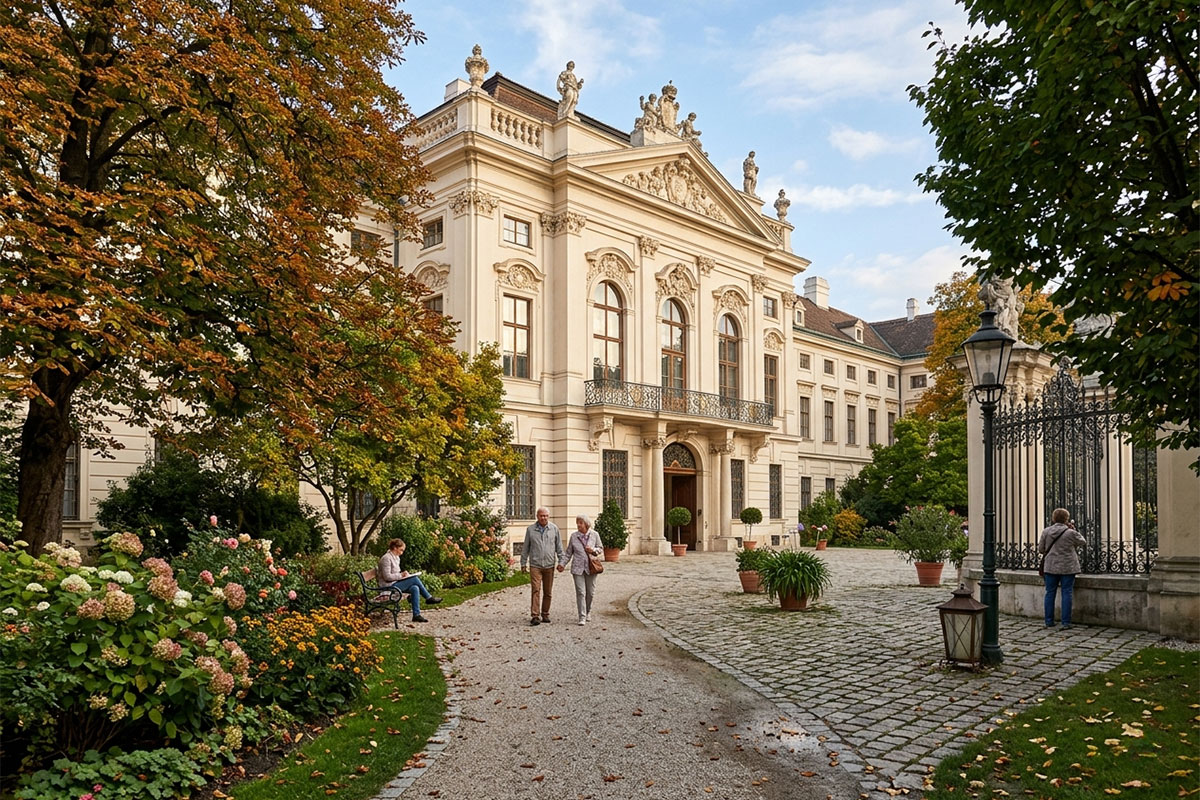
Vienna is a city that wears its history on its sleeve, draping itself in the velvet robes of imperial grandeur. When travelers think of the Austrian capital, images of the sprawling Schönbrunn Palace or the imposing Hofburg complex immediately spring to mind. These giants are undeniably magnificent, standing as testaments to the power of the Habsburg dynasty. However, relying solely on these famous landmarks is like reading only the headlines of a very thick, beautifully written novel. The true soul of Vienna often resides in its quieter corners, behind the heavy wooden doors of lesser-known palaces that dot the cityscape like hidden jewels waiting to be discovered.
For the curious traveler willing to step off the beaten path in January 2026, the city offers a different kind of luxury—the luxury of silence and intimacy. Beyond the tour buses and the crowded ticket lines lies a network of aristocratic residences, each with its own dramatic history, architectural quirks, and artistic treasures. These hidden gems offer a glimpse into the private lives of Vienna’s nobility, distinct from the rigid protocol of the imperial court. Exploring these sites allows you to connect with the city on a deeper, more personal level, wandering through ballrooms where the echoes of waltzes seem to linger just beneath the surface.
Beyond the Imperial Giants
It is easy to get blinded by the sheer scale of the Hofburg, but Vienna’s architectural tapestry is woven with hundreds of Palais built by princely families who wanted to rival the Emperor in style, if not in power. These structures are often nestled inconspicuously between modern buildings or tucked away in serene parklands. Visiting them provides a stark contrast to the bustling main tourist arteries. Here, you aren't just a number in a turnstile; you are a guest stepping into a preserved moment in time. The architecture ranges from the playful flourishes of the Rococo to the stern, imposing lines of the early Baroque, offering a visual feast for design enthusiasts.
Moreover, these lesser-known palaces often house specific cultural institutions, from specialized museums to exquisite art collections that rival national galleries. Because they attract fewer crowds, they allow for a contemplative experience that is rare in modern travel. You can stand before a masterpiece without jostling for position, or admire a ceiling fresco without the distraction of a hundred camera flashes. Let us guide you through the heavy oak doors of Vienna's best-kept secrets.
The Garden Palace: Palais Liechtenstein
Situated in the Rossau district, the Garden Palace Liechtenstein is a Baroque masterpiece that often escapes the radar of the average weekend tourist. Built for Prince Johann Adam Andreas I von Liechtenstein, this palace is a celebration of art and nature intertwining. The exterior alone is breathtaking, but the true magic lies within its walls, which house part of the private art collection of the Prince von Liechtenstein. It is one of the largest and most significant private art collections in the world, featuring works by Rubens, Rembrandt, and Van Dyck.
The centerpiece of the palace is undoubtedly the Hercules Hall. With its monumental ceiling fresco by Andrea Pozzo, the hall creates an optical illusion of opening up to the heavens, a feature that leaves visitors dizzy with awe. Unlike the museum-like sterility of some galleries, the art here is displayed in the context for which it was intended—surrounded by gilded stucco, marble floors, and velvet drapery. The surrounding gardens are equally inviting, offering a peaceful retreat where locals stroll and read, far removed from the city's noise.
Sisi’s Sanctuary: The Hermesvilla
Far from the city center, located in the idyllic Lainzer Tiergarten, stands the Hermesvilla, a place often referred to as the "Palace of Dreams." Emperor Franz Joseph I commissioned this villa as a gift for his wife, Empress Elisabeth (Sisi), in a desperate attempt to keep the travel-loving Empress in Vienna. Nestled within a vast nature reserve that was once the imperial hunting ground, the villa is a romantic, almost fairy-tale structure that reflects the late 19th-century fascination with historicism.
The interior of the Hermesvilla is a fascinating window into Sisi’s private world. Notable artists of the era, including a young Gustav Klimt, contributed to the decoration, creating a space that is both regal and surprisingly intimate. The bedroom, with its gigantic state bed and murals depicting scenes from Shakespeare's "A Midsummer Night's Dream," is particularly evocative. Visiting the Hermesvilla requires a walk through the forest, making the journey itself part of the experience. It feels less like a museum tour and more like stumbling upon a secret hideaway.
Why You Should Visit the Hermesvilla
- Nature Meets Architecture: The walk through the Lainzer Tiergarten offers fresh air and the chance to spot wild boars and deer before you even reach the palace.
- Artistic Significance: See the early works of Gustav Klimt and Hans Makart integrated into the interior design.
- Intimate History: Learn about the complex relationship between Franz Joseph and Sisi away from the rigid court protocol of Schönbrunn.
- Peaceful Atmosphere: It is rarely crowded, allowing for a quiet, reflective visit perfect for soaking in the atmosphere.
Palais Lobkowitz: The Sound of Music
Vienna is the world capital of music, and Palais Lobkowitz is one of its most significant, yet frequently overlooked, musical shrines. Located near the Albertina, this magnificent Baroque palace is now home to the Theater Museum, but its walls hold echoes of musical history that are spine-tingling. It was here, in the grand Eroica Hall, that Ludwig van Beethoven frequently performed and where his Third Symphony, the "Eroica," was rehearsed and premiered for a private audience. The Palais also boasts a rich history beyond Beethoven; in 1809, Napoleon Bonaparte stayed here during the French occupation of Vienna. The palace has also hosted numerous balls and social events throughout its history, making it a central hub for Viennese high society.
The architecture of Palais Lobkowitz is stunning, with a façade that commands attention, but it is the connection to Beethoven that gives it a soul. Walking through the Eroica Hall, one can almost hear the revolutionary chords that changed the course of classical music. The Theater Museum itself is a treasure trove for culture lovers, displaying costumes, stage designs, and props that tell the story of Austrian theater. It is a dual experience: a journey through architectural beauty and a deep dive into the performing arts. Consider checking the Theater Museum's schedule for special exhibitions or performances that might coincide with your visit, offering an even richer cultural experience.
Palais Kinsky: High Baroque Elegance
Walking along the Freyung, one of Vienna’s most beautiful squares, it is impossible to miss the striking yellow façade of Palais Kinsky. Built for Count Wirich Philipp von Daun, the palace is considered one of the most sophisticated examples of High Baroque architecture in the city. The architect, Johann Lukas von Hildebrandt, who also designed the Belvedere, created a façade that is dynamic and rich in detail, with pilasters and decorative elements that seem to move with the light.
While Palais Kinsky is largely used for events and art auctions today, stepping into its courtyard or attending a public event there reveals a staircase that is an architectural marvel in its own right. The flowing lines and the interplay of light and shadow on the stone steps are characteristic of Hildebrandt’s genius. It serves as a reminder that in Vienna, art is not just hanging on walls; it is built into the very fabric of the buildings you pass by every day.
Comparing the Hidden Gems
| Palace Name | Architectural Style | Best Known For | Ideal Visitor |
| Palais Liechtenstein | Baroque | Rubens collection & Hercules Hall | Art aficionados |
| Hermesvilla | Historicism | Empress Sisi's private retreat | Romantics & Nature lovers |
| Palais Lobkowitz | Baroque | Beethoven's Eroica Hall | Music history buffs |
| Palais Kinsky | High Baroque | Stunning yellow façade & staircase | Architecture enthusiasts |
Practical Tips for Accessing These Gems
One of the common misconceptions about these lesser-known palaces is that they are private residences closed to the public. While some areas may be restricted, many have transformed into museums, galleries, or event spaces that welcome visitors. Accessing them is often easier than you might think, and they frequently offer a more relaxed entry process compared to the timed-entry slots required at major imperial sites.
Understanding Ticket Options
Most of these locations operate as independent museums or are part of larger cultural associations. For example, the Hermesvilla is part of the Wien Museum network, while Palais Lobkowitz houses the Theater Museum, which is affiliated with the Kunsthistorisches Museum group. This means that if you have a city card or a specific museum pass, entry to these hidden gems might already be included. It is always wise to check if your multi-attraction pass covers these specific locations, as it can offer significant savings and the convenience of skipping ticket lines.
Planning Your Visit
Since these palaces are not the primary tourist hubs, their opening hours can vary and may change seasonally. Some, like the Garden Palace Liechtenstein, may require booking a guided tour in advance to see the private art collections. Always check the official websites for the most current opening times before you head out. Exploring these sites in the morning often guarantees you will have the rooms almost entirely to yourself, allowing the history and atmosphere to truly sink in without distraction.