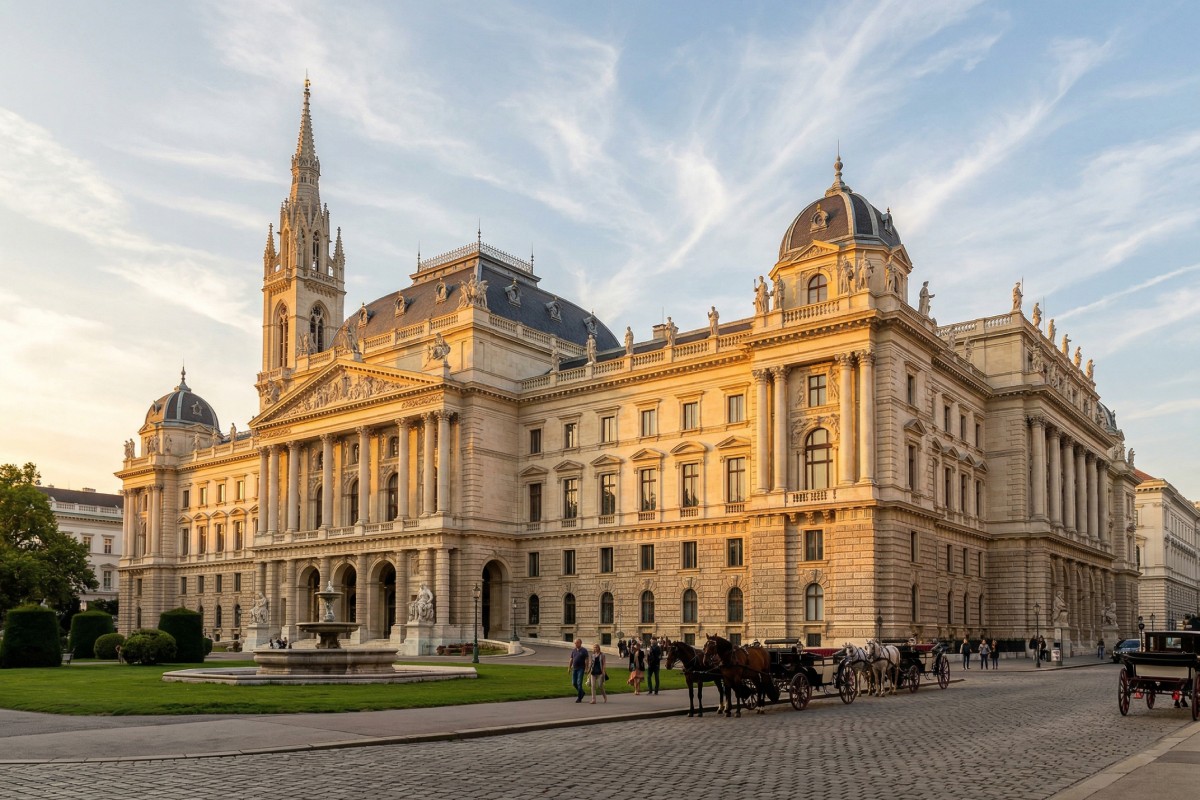
Walking through the heart of Vienna, the crisp winter air seems to amplify the grandeur of the city’s skyline. There is a theatrical quality to the Austrian capital that few other European cities can replicate, a sensation that you have stepped onto a grand stage set for an imperial opera. This atmosphere is largely due to the architectural explosion of the 19th century, a period that transformed Vienna from a fortified medieval town into a sprawling, modern metropolis. The buildings from this era do not whisper; they sing in a chorus of different historical languages, creating a visual symphony known as Historicism. To understand Vienna is to understand this eclectic mix, where every column and arch tells a story of identity, ambition, and the shifting tides of history.
The Birth of the Ringstraße: A Canvas for Eclecticism
The story of Vienna's 19th-century architectural renaissance begins with a decree. In 1857, Emperor Franz Joseph I ordered the demolition of the old city walls that had long constricted the city center. In their place, he envisioned a magnificent boulevard that would encircle the inner city, showcasing the wealth and power of the Habsburg Empire. This became the Ringstraße, arguably the most beautiful boulevard in the world. It wasn't just a road; it was a blank canvas for the era's greatest architects, including Theophil Hansen, Heinrich von Ferstel, and Friedrich von Schmidt, to experiment with the past.
Unlike modern architecture, which often seeks to invent new forms, the architects of 19th-century Vienna looked backward to move forward. They believed that specific historical styles carried inherent meanings and virtues. Consequently, the Ringstraße became a timeline of art history, where buildings were designed in styles that matched their function. This approach, known as Historicism or Eclecticism, resulted in a fascinating juxtaposition where a Greek temple stands mere steps away from a Gothic tower. It was a deliberate stylistic choice meant to project the values of culture, democracy, and imperial continuity simultaneously.
Decoding the Language of Stones
As you wander past these palatial structures, you begin to notice a pattern in the architectural chaos. The choice of style was never random; it was deeply symbolic. The architects assigned a 'character' to each building based on historical precedents. This creates a unique dialogue between the structures, where the facade tells you exactly what happens inside before you even step through the doors. It is a form of architectural coding that requires a keen eye to decipher, turning a simple walk into an intellectual treasure hunt.
- Neo-Gothic: Used for civic and religious power. The Rathaus (City Hall) was built in a Flemish Gothic style to symbolize the freedom of medieval cities and the power of the burghers.
- Neo-Greek: Chosen for the Parliament building. Since democracy originated in ancient Greece, Theophil Hansen designed a structure that looks like it was airlifted directly from Athens to honor the concept of parliamentary rule.
- Neo-Renaissance: Applied to centers of art and learning. The University of Vienna and the State Opera House utilize this style to reflect the enlightenment and cultural rebirth associated with the Italian Renaissance.
- Neo-Baroque: Often reserved for the imperial family and the Burgtheater, reflecting the grandeur and absolutism of the Habsburg dynasty's peak years.
The Private Palaces: The Rise of the 'Ringstraßenbaron'
While the Emperor commissioned the public buildings, the spaces in between were filled by a new, wealthy class of Viennese society. Bankers, industrialists, and successful merchants—often referred to as 'Ringstraßenbarons'—wanted homes that rivaled the imperial residences in splendor. These private palaces, or Palais, are the hidden gems of Vienna's eclectic era. They served as both luxurious residences and status symbols, proving that the bourgeoisie had arrived and intended to stay.
Consider the Palais Epstein, designed by Theophil Hansen. It is a masterpiece of the strict Neo-Renaissance style, echoing the noble palazzos of Rome. However, the interior tells a different story, blending classical elements with modern 19th-century comforts. Similarly, the Palais Todesco stands as a testament to the immense wealth of the Jewish banking families of the time. These buildings were not just homes; they were salons where the intellectual and artistic elite of Vienna—figures like Freud, Klimt, and Mahler—would gather. The architecture provided the stage for the 'Vienna 1900' cultural explosion.
Architectural Styles and Their Viennese Icons
To truly appreciate the diversity of the Ringstraße, it helps to see the direct correlation between the style chosen and the building's purpose. The following table breaks down the eclectic mix that defines this golden era of construction:
| Architectural Style | Symbolic Meaning | Iconic Example | Key Features |
| Neo-Classical / Greek Revival | Democracy, Logic, Law | Austrian Parliament | Corinthian columns, triangular pediments, statues of scholars. |
| Neo-Gothic | Civic Freedom, Spirituality | Votivkirche & City Hall | Pointed arches, soaring spires, intricate stone tracery. |
| High Renaissance | Arts, Science, Humanism | Museum of Art History (KHM) | Symmetrical facades, grand domes, heavy rustication. |
| French Renaissance | Romance, Leisure | Vienna State Opera | Loggias, decorative frescoes, grand staircases. |
The Interior World: The Makart Style
The eclecticism of the 19th century did not stop at the front door. If you are fortunate enough to step inside one of these palaces, you enter a world defined by horror vacui—the fear of empty space. The interiors were heavily influenced by Hans Makart, a painter whose studio became the blueprint for Viennese living rooms. The 'Makart Style' was characterized by heavy velvet curtains, dark wood paneling, palm plants, and an abundance of decorative objects. It was a sensory overload designed to mute the noise of the industrializing city outside.
This interior design philosophy complemented the exterior architecture perfectly. Just as the facades borrowed from history to establish authority, the interiors borrowed from everywhere to establish culture. Persian rugs lay beneath Venetian chandeliers; Japanese ceramics rested on German oak tables. It was a cosmopolitan mix that reflected Vienna's position as the capital of a multi-ethnic empire. Standing in these rooms today, you can almost hear the rustle of silk dresses and the clinking of coffee cups from a century ago.
A Legacy Carved in Stone
The 19th-century palaces of Vienna are more than just pretty backdrops for tourists; they are the physical embodiment of a society in transition. They capture a moment when an empire was trying to hold onto its traditions while hurtling toward modernity. The eclectic styles—borrowing from Rome, Greece, and the Middle Ages—reveal a city searching for its identity through the lens of history. It is a poignant reminder that architecture is never just about shelter; it is about storytelling.
As you explore Vienna, look beyond the sheer size of these structures. Notice the caryatids supporting a balcony, the frescoes hidden under a cornice, and the deliberate clash of styles that somehow creates a harmonious whole. In a world that is increasingly uniform, Vienna’s eclectic 19th-century heritage stands as a monument to individuality and the enduring power of beauty. Whether you are an architecture buff or simply a curious traveler, the Ringstraße offers an endless gallery of wonders, open to the sky and free for all to admire.
Ready to explore these architectural marvels in person? Plan your visit to Vienna and immerse yourself in the history and beauty of the Ringstraße. Consider joining a guided tour to uncover even more hidden stories and architectural details. And don't forget to share your photos and experiences with us!