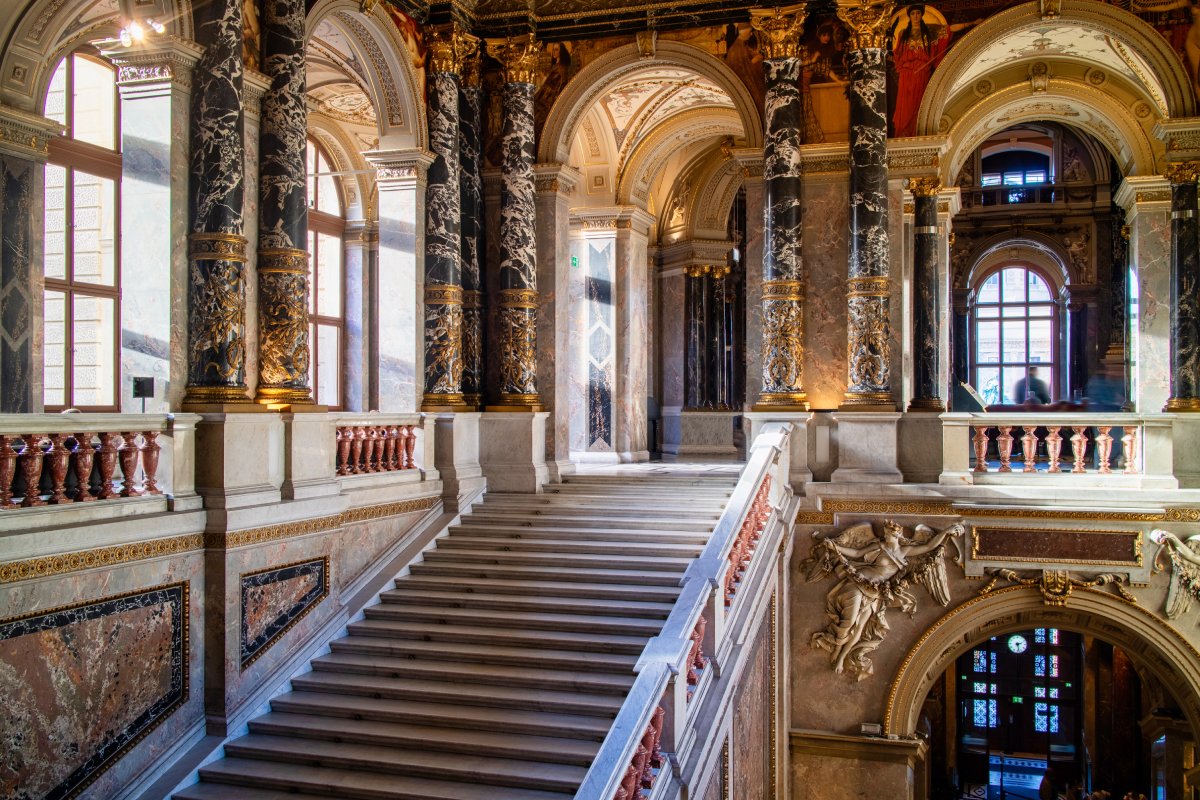
When travelers arrive in Vienna, they are immediately swept away by the sheer visual magnitude of the city. The Austrian capital is a masterpiece of Baroque architecture, where every corner seems to drip with gold leaf and imperial grandeur. However, walking through these streets in January 2026, one realizes that the true allure of Vienna lies not just in what you see, but in what has been carefully hidden away for centuries. Behind the velvet ropes and beneath the painted frescos of the Habsburg dynasty’s residences lie stories of heartbreak, eccentricity, and political intrigue that guidebooks often overlook. To truly understand the spirit of this city, we must look past the polished marble and explore the human dramas that played out within these gilded cages.
The imperial palaces of Vienna are more than just museums; they are silent witnesses to the rise and fall of one of Europe’s most powerful families. While thousands of visitors flock to see the crown jewels and the state apartments, the walls whisper lesser-known tales of lonely empresses, secret passages, and heirs who never ascended the throne. By peeling back the layers of history, we discover that these grand structures were homes to people with profound flaws and fascinating secrets, making the stone and mortar feel incredibly alive.
The Hofburg: A Labyrinth of Shadows and Secrets
The Hofburg is not merely a palace; it is a sprawling city within a city that evolved over seven centuries. As the winter residence of the Habsburgs, it houses over 2,600 rooms, making it a labyrinth where secrets could easily be buried. While the Spanish Riding School and the Imperial Treasury attract the crowds, the true emotional core of the Hofburg lies in the legacy of Empress Elisabeth, known to the world as Sisi. Her apartments tell a story far removed from the fairy-tale romance often portrayed in films. It is here that the legend of the "reluctant empress" becomes a tangible, somewhat melancholic reality. Explore the Hofburg Palace virtually.
Sisi detested court protocol and the prying eyes of the aristocracy, eventually retreating into a private world of obsession and physical exertion. Visitors today can still see her private gymnasium, a scandalous installation for a 19th-century royal woman. She installed wall bars and rings in her dressing room, spending hours training to maintain her impossibly thin waist. But the hidden story here is the extreme lengths she went to preserve her beauty. Legend has it that she slept with raw veal on her face to prevent wrinkles and refused to be painted or photographed after the age of 30 to preserve her image of eternal youth. The Hofburg was less a home and more a golden fortress where she battled her own demons.
The Phantom of the Reitschule
Another whisper that circulates through the Hofburg involves the Winter Riding School. There is an old legend among the stable hands about the "White Stallion" that appears only when a Habsburg monarch is about to die. While the Lipizzaner horses are world-famous for their grace, this spectral equine figure is said to be an omen of doom. Historical accounts suggest that keepers reported strange, unexplained noises and the sound of hooves in the empty hall prior to the fall of the empire in 1918, adding a supernatural layer to the imperial history.
Schönbrunn Palace: The Tragic Eaglet in the Golden Cage
If the Hofburg was the seat of power, Schönbrunn Palace was intended to be a summer sanctuary. With its 1,441 rooms and vast gardens, it rivals Versailles in splendor. However, amidst the Rococo exuberance and Maria Theresa’s distinct yellow facade, there lies a tragic tale centered around a young man known as the Duke of Reichstadt. He was the son of Napoleon Bonaparte and Archduchess Marie Louise, born to rule empires but destined to die as a prisoner of luxury within these very walls. Plan your visit to Schönbrunn Palace.
Known as "The Eaglet," Napoleon II was kept at Schönbrunn after his father's defeat, stripped of his French title and raised as an Austrian archduke. The hidden tragedy is palpable in the room where he spent his final days. Despite being the grandson of the Emperor, he was isolated, his correspondence monitored, and his heritage suppressed. He died of tuberculosis at the tender age of 21 in the very same room Napoleon had slept in during his occupation of Vienna. It is said that his ghost still wanders the Great Parterre, a young man forever searching for the father he barely knew and the empire he lost.
Maria Theresa’s Secret Diplomacy
Schönbrunn was also the stage for Empress Maria Theresa’s unique brand of management. While the Great Gallery was used for official balls, the real decisions were made in the "Vieux Laque" Room. Following her husband's death, Maria Theresa turned this room into a memorial, clad in black lacquer and walnut. However, legends suggest that this somber room utilized a secret acoustic quirk. The Empress would hold private audiences here, and it is rumored she used the room's layout to overhear the hushed conversations of diplomats waiting in the antechamber, giving her the upper hand in negotiations before the meetings even began.
Belvedere Palace: The Outsider’s Triumph
The Belvedere is often celebrated for its collection of Gustav Klimt paintings, but the story of its builder, Prince Eugene of Savoy, is a fascinating tale of rejection and triumph. Eugene was not a Habsburg; he was born in Paris and initially sought to serve the French King Louis XIV. The King, mocking Eugene’s small stature and assuming he was unfit for war, rejected him. This rejection changed the course of European history. Eugene offered his sword to the Austrian Emperor instead, becoming one of the greatest military commanders of his time and the savior of Vienna against the Ottoman siege. Discover the Belvedere's art collection.
The hidden irony of the Belvedere is that it was built as a statement of power by a man who was once considered a "little abbot" by the French court. The Upper and Lower Belvedere palaces were designed not just as residences, but as a massive trophy case. The layout of the gardens and the position of the buildings were calculated to look down upon the city, subtly placing Eugene on par with the Emperor himself. Furthermore, the palace grounds once housed a massive menagerie (zoo), remnants of which can still be traced. Eugene was obsessed with exotic animals, perhaps finding kinship with creatures that were unique and misunderstood, much like himself.
Comparing the Imperial Legends
To better understand the distinct atmosphere of each location, it helps to look at the primary figures and the hidden narratives that define them. The following table breaks down the essence of these architectural marvels beyond their physical beauty.
| Palace | Primary Figure | Atmosphere | The Hidden Story |
| The Hofburg | Empress Elisabeth (Sisi) | Oppressive, Official, Melancholic | Sisi’s extreme beauty regimens and the "gymnasium" hidden in her boudoir. |
| Schönbrunn | Napoleon II (The Eaglet) | Grand, Familial, Tragic | The isolation and death of Napoleon’s son, a prisoner in his own grandfather's home. |
| Belvedere | Prince Eugene of Savoy | Triumphant, Artistic, Exotic | Built by a French reject who became Austria's hero; originally housed a massive exotic zoo. |
| Hermesvilla | Empress Elisabeth | Remote, Private, Dreamy | The "Palace of Dreams" built solely as a bribe to keep Sisi in Vienna. |
The Hermesvilla: A Golden Bribe
While not as famous as the big three, the Hermesvilla situated in the Lainzer Tiergarten is essential for completing the narrative of Vienna's imperial secrets. Emperor Franz Joseph, desperate to keep his wandering wife in Vienna, commissioned this villa as a "Castle of Dreams." It is a hidden gem located in the midst of a former imperial hunting ground, far removed from the stifling protocol of the city center. Learn more about the Hermesvilla.
The story here is one of a failing marriage and a husband's desperate attempt to buy affection with architecture. The villa is filled with murals depicting scenes from Shakespeare’s A Midsummer Night’s Dream, a direct nod to Sisi’s love for poetry and fantasy. However, the hidden sorrow of the Hermesvilla is that it rarely worked. Sisi spent very little time here, preferring to travel the Mediterranean. Today, walking through its quiet rooms offers a poignant look into the private loneliness of the Emperor, who built a shrine for a wife who could not be tamed.
Unlocking the Past
Exploring Vienna in 2026 offers a modern perspective on these ancient tales. The preservation of these sites allows us to step directly into the footprints of the past. To truly appreciate these stories, one must look for the small details: the secret door in a wall panel, the worn velvet of a prayer kneeler, or the specific view from a window where an emperor might have stood gazing out in worry.
- Look for the hidden staircases: In Schönbrunn, pay attention to the corners of the private chambers where servants moved unseen.
- Notice the mirrors: In the Hofburg, the mirrors were positioned to allow the royals to see who was approaching without turning their heads.
- Walk the gardens: The paths of the Belvedere were designed for military precision walking, reflecting Prince Eugene's disciplined mind.
Vienna’s imperial palaces are not just static monuments of stone; they are repositories of human emotion. From the tragic isolation of Napoleon’s son to the vanity and despair of Empress Sisi, the true history of this city is written in the lives of those who inhabited it. When you visit, listen closely—the walls have stories to tell that are far more captivating than any guidebook description.