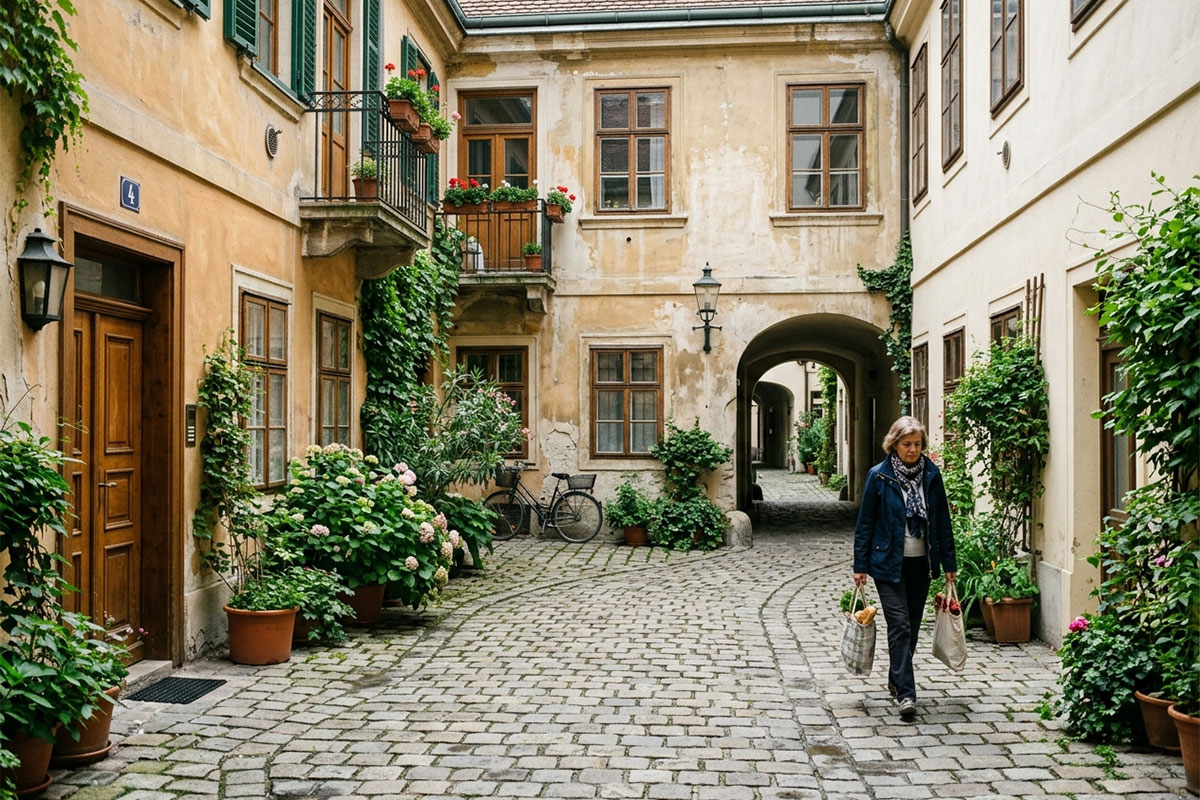
Vienna is a city that often feels like an open-air museum, where the grandeur of the Habsburg Empire is etched into every cobblestone of the First District. However, for the curious traveler in 2026, the true magic of the Austrian capital lies not in the crowded squares surrounding St. Stephen’s Cathedral or the long lines at Schönbrunn Palace, but in the quiet whispers of its outer districts. While the imperial history is undeniable, there is a parallel Vienna—a city of eccentric architecture, silent courtyards, and vibrant neighborhood markets—that remains largely invisible to the standard guidebook user. Exploring these off-the-beaten-path locations offers a deeper, more intimate connection with the city's unique culture and the daily lives of the Viennese people.
To truly understand the rhythm of this city, one must be willing to step away from the Ringstraße and venture into the Grätzel (neighborhoods) where locals sip their mélange and discuss world politics. This itinerary is designed for those who seek authenticity over popularity, guiding you through spaces where history breathes a little softer and the crowds are non-existent. From brutalist churches to quirky museums dedicated to the Viennese fascination with the afterlife, get ready to peel back the layers of this sophisticated metropolis.
Beyond the Baroque: Architectural Oddities
When you think of Viennese architecture, images of ornate Baroque palaces and Gothic spires likely come to mind. Yet, the city harbors some of Europe's most fascinating modernist and brutalist structures that tell a completely different story of the 20th century. These sites are rarely crowded, offering a peaceful environment to appreciate the artistic evolution of the city beyond the imperial era.
The Wotrubakirche (Church of the Holy Trinity)
Perched on a hill in the 23rd district, far removed from the city center’s hustle, stands one of the most unusual churches in the world. Designed by sculptor Fritz Wotruba, this brutalist sanctuary is constructed from 152 asymmetrical concrete blocks that seem to be stacked by a giant hand. The interior is surprisingly warm and intimate, with light filtering through the gaps in the concrete to create a meditative atmosphere. It is a stark, powerful contrast to the gilded decorations of the inner city and offers a panoramic view of the Vienna Woods that few tourists ever see.
Kirche am Steinhof (Otto Wagner Church)
While Gustav Klimt dominates the souvenir shops, architect Otto Wagner’s contributions to Vienna’s skyline are equally significant but often overlooked. The Church of St. Leopold, located within the Steinhof Psychiatric Hospital grounds, is the crowning jewel of Viennese Art Nouveau (Jugendstil). Its golden dome shines visibly from a distance, yet the interior remains a quiet sanctuary. Every detail, from the mosaics to the pews, was designed with the patients' needs in mind, combining functionality with breathtaking aesthetics. Visiting this site requires a bit of travel to the Penzing district, but the reward is an uninterrupted encounter with an architectural masterpiece.
The Viennese Cult of the Dead
The locals have a saying, "A schöne Leich" (a beautiful funeral), which encapsulates their historically morbid yet humorous relationship with death. To understand the Viennese soul, you must explore how they honor the end of life. This isn't about being macabre; it is about witnessing a cultural phenomenon that treats death as a natural, even celebrated, part of existence.
- The Funeral Museum (Bestattungsmuseum): Located at the Central Cemetery, this museum is a fascinating dive into elaborate burial customs. You can see reusable coffins from the era of Emperor Joseph II and hear stories about the city's most famous funerals.
- Friedhof der Namenlosen (Cemetery of the Nameless): Situated by the Albern harbor, this is the final resting place for those who washed up on the banks of the Danube between 1840 and 1940. It is a melancholic, incredibly quiet, and moving site that feels worlds away from the pomp of the Imperial Crypt.
- The Crypt of St. Michael’s Church: While St. Stephen's catacombs are famous, the crypt at St. Michael's offers a more raw experience. Due to special atmospheric conditions, bodies here mummified naturally, and you can tour these historic chambers in small, respectful groups.
Secret Courtyards and Green Oases
Vienna is one of the greenest cities in the world, but the best spots aren't always the massive public parks like the Prater. Hidden behind the heavy wooden doors of residential buildings lie the Pawlatschen courtyards—inner courtyards with wooden galleries that were once the social hubs of tenement life. While many are private, wandering through the Spittelberg area or the older parts of the 7th district often reveals these architectural gems that have been lovingly restored and filled with ivy and potted plants.
Setagaya Park
For a moment of Zen, head to the 19th district to find Setagaya Park, a Japanese garden that symbolizes the friendship between Vienna and the Tokyo ward of Setagaya. It is a meticulously landscape space featuring ponds, stone lanterns, and a tea house. Unlike the busy Stadtpark, this garden is usually occupied only by locals reading books or seeking a quiet lunch break. It is particularly stunning in the spring and autumn, offering a burst of color and tranquility that feels entirely transported from another continent.
Authentic Flavors: Markets and Heuriger
Food is the heart of Viennese culture, but the famous Naschmarkt has become increasingly commercialized over the years. To taste what the locals are eating in 2026, you need to venture to the neighborhood markets. These are the places where grandmothers haggle for vegetables and young chefs experiment with farm-to-table concepts.
| Feature | Tourist Hotspot (Naschmarkt) | Local Gem (Brunnenmarkt/Yppenplatz) |
| Atmosphere | Bustling, crowded, souvenir-heavy | Multicultural, artistic, laid-back |
| Food Focus | International delicatessen, high-end treats | Fresh produce, Turkish bakeries, affordable bistros |
| Crowd | Mostly tourists and tour groups | Students, artists, and local residents |
| Best Time | Early morning to avoid crowds | Saturday mornings for the farmer's market vibe |
No off-the-beaten-path itinerary is complete without visiting a Heuriger (wine tavern), but you should skip the bus-filled streets of Grinzing. Instead, take the tram to Stammersdorf or Mauer. These areas lie on the edge of the Vienna Woods and preserve the rustic charm of the wine tradition. Here, you sit on wooden benches in a gravel courtyard, drinking Gemischter Satz (field blend wine) produced from the vineyards visible just up the hill. It is an unpretentious, communal experience where strangers become friends over a carafe of wine and a spread of cold cuts and spreads.
Curious Collections: Niche Museums
If you have had your fill of imperial art collections, Vienna offers a plethora of niche museums that cater to specific and often quirky interests. These institutions are usually run with immense passion and offer deep dives into subjects you never knew you were interested in. They provide a refreshing break from the overwhelming scale of the Kunsthistorisches Museum.
The Globe Museum
Hidden within the Palais Mollard is the only museum in the world exclusively dedicated to terrestrial and celestial globes. The collection includes hundreds of globes, some dating back to the 16th century, showcasing how humanity’s understanding of the world and the stars has evolved. The dimly lit rooms and the sheer craftsmanship of these scientific instruments create an atmosphere of exploration and discovery.
The Third Man Museum
Film buffs will adore this private museum dedicated to the classic noir film The Third Man, which was shot in post-war Vienna. It is not just about the movie; it is an extensive historical collection documenting the reality of life in occupied Vienna between 1945 and 1955. The museum provides context to the city's darker days, offering a gritty counter-narrative to the romanticized Sisi mythos. It is run by passionate owners who are often on-site to share personal stories and details about the collection.
Embracing the Slow Travel Pace
Exploring these hidden gems requires a shift in mindset. It isn't about ticking boxes or rushing from one site to another; it is about embracing the Viennese art of Gemütlichkeit—a state of coziness and unhurried leisure. Whether you are marveling at the concrete angles of the Wotrubakirche or watching the sunset from a vineyard in Stammersdorf, you are engaging with the living, breathing city. This itinerary invites you to become a temporary local, finding beauty in the quiet corners and the unexpected details that make Vienna truly unforgettable.