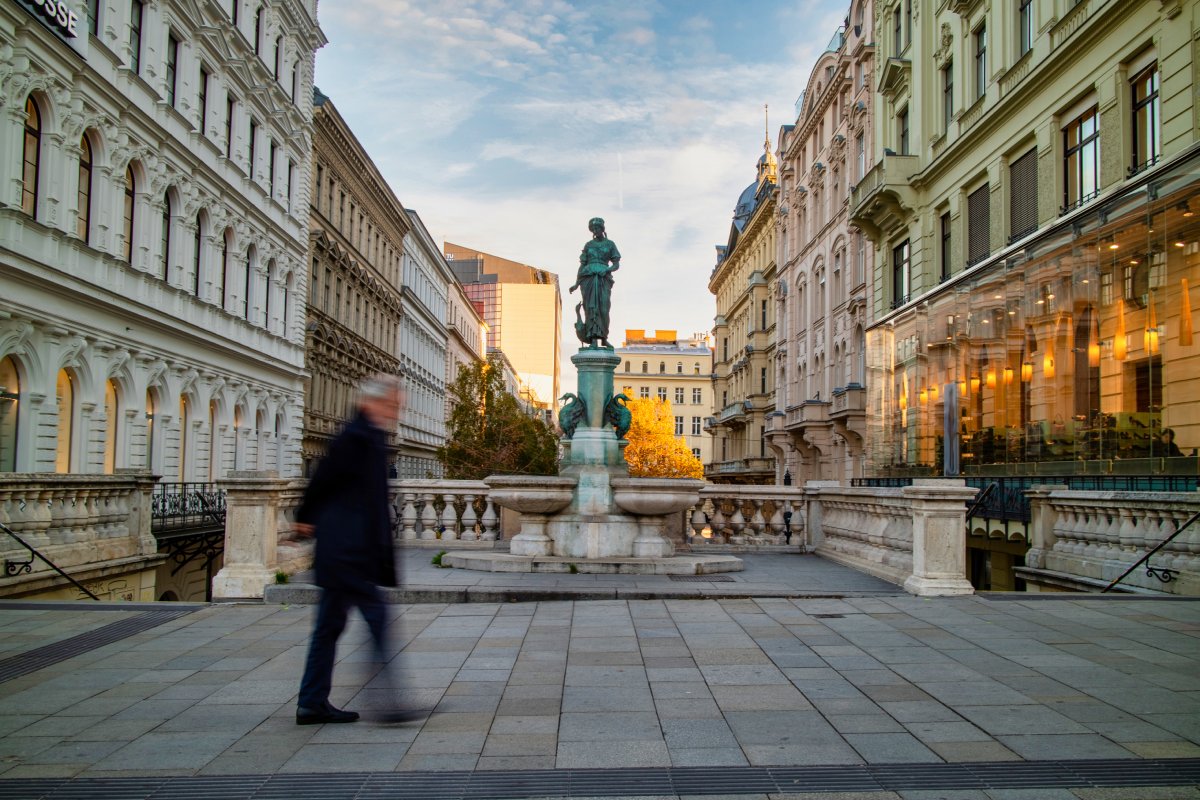
When you walk through the streets of Vienna in January 2026, the city feels like a grand open-air museum where the past and present constantly whisper to one another. Among the imperial palaces and coffee houses, there is a distinct visual language that stands out—a shimmer of gold, organic lines, and a bold rejection of the ordinary. This is the legacy of the Vienna Secession, a movement that did not just change art history; it fundamentally altered how we perceive beauty, design, and human emotion. To truly understand the soul of this city, one must dive into the world of Vienna's Secession movement, where artists like Gustav Klimt and Egon Schiele challenged traditional aesthetics with a ferocity that still resonates today.
The turn of the 20th century in Vienna was a melting pot of intellectual and artistic energy, yet the established art institutions were suffocatingly conservative. The Academy of Fine Arts favored historical realism—paintings that looked like photographs of myths and battles—while a new generation of artists yearned for something that reflected the complexities of modern life. In 1897, a group of rebels decided they had enough. Led by the charismatic Gustav Klimt, they resigned from the Association of Austrian Artists to form the *Wiener Secession*. Their goal was not just to paint differently, but to liberate art from the constraints of commerce and convention, creating a sanctuary where international trends could merge with local genius.
The Golden Rebel: Gustav Klimt
Gustav Klimt is undoubtedly the figurehead of this artistic revolution, and his influence is woven into the very fabric of Vienna's cultural identity. Before he became the master of gold leaf and erotic symbolism, Klimt was a successful decorator of public buildings, respected for his academic skill. However, his shift toward the Secessionist style marked a dramatic turning point. He began to focus on the female form, blending realistic portraiture with abstract, decorative backgrounds that flattened the space and elevated the subject to a nearly divine status. His work was controversial, often deemed pornographic by critics of the time, yet it captured the anxieties and desires of a society on the brink of change.
Klimt's "Golden Phase" produced some of the most recognizable images in human history, most notably The Kiss. Standing before this masterpiece at the Belvedere Palace is an almost spiritual experience for many travelers. The painting depicts a couple locked in an embrace, their bodies dissolved into shimmering geometric patterns, isolated in a meadow of flowers. It is a perfect encapsulation of the Secessionist ideal: the fusion of fine art and decorative craft to express universal themes of love and intimacy. Klimt proved that art didn't need to tell a historical story to be significant; it simply needed to evoke a feeling, a mood, or a dream state.
Egon Schiele: The Raw Nerve of Modernism
If Klimt was the golden sun of the Secession, his protégé Egon Schiele was its dark, exposing shadow. Schiele took the decorative lines of Art Nouveau and twisted them to reveal the raw, often uncomfortable truths of the human condition. While Klimt clothed his subjects in ornamentation, Schiele stripped them down—literally and metaphorically. His figures are angular, emaciated, and contorted, often staring back at the viewer with an intensity that can be unsettling. Beyond his unflinching portrayal of the human form, Schiele also explored themes of isolation, sexuality, and death with a visceral honesty that was shocking for his time. He used bold lines and jarring colors to convey the psychological turmoil of his subjects, creating a body of work that is both disturbing and deeply moving. Schiele’s work challenged traditional aesthetics by suggesting that beauty could be found in the grotesque, the decaying, and the deeply psychological.
Schiele's career was tragically short, cut off by the Spanish Flu in 1918 at the age of 28, but his impact was monumental. He moved the conversation from the external decoration of the Secession to the internal turmoil of Expressionism. In museums like the Leopold Museum, which houses the world's largest collection of his works, you can see the evolution of his innovative styles. His self-portraits are particularly striking; they are not acts of vanity but ruthless self-examinations. Schiele showed the world that art could be a tool for psychological exploration, influencing generations of modern artists who sought to portray the inner self rather than the outer facade.
The Architecture of Rebellion
The Secessionist movement was never limited to canvas; it was a "Total Work of Art" (Gesamtkunstwerk) that encompassed architecture, furniture, jewelry, and graphic design. The physical manifestation of this philosophy is the Secession Building itself, designed by Joseph Maria Olbrich. With its white walls and a dome of golden laurel leaves—affectionately called the "golden cabbage" by locals—it stands as a temple to art. Above the entrance, the movement's motto is inscribed in gold: "To every age its art, to art its freedom." This building was, and remains, an exhibition space dedicated to the avant-garde, proving that the physical space art inhabits is just as important as the art itself.
To understand the drastic shift the Secessionists introduced, it is helpful to compare their approach with the prevailing style of the time, known as Historicism. The differences were not subtle; they were a complete reimagining of visual culture.
| Feature | Historicism (Traditional) | Vienna Secession (Modern) |
| Inspiration | Past eras (Greek, Roman, Renaissance) | Nature, geometry, psychology, Japanese art |
| Purpose | To educate, glorify the state, and preserve tradition | To express emotion, innovate, and unify daily life with art |
| Technique | Realistic perspective, dark palettes, polished finish | Flat dimensions, decorative patterns, gold leaf, expressive lines |
| Subject Matter | Historical events, mythology, formal portraits | Allegory, sexuality, psychological states, everyday objects |
Where to Experience the Legacy Today
For the modern traveler, Vienna offers a treasure trove of locations where the spirit of the Secession is alive and palpable. It is not just about seeing paintings on a wall; it is about stepping into the environments these artists created. The legacy of the movement is preserved in world-class institutions that curate these works with the context and respect they deserve. When planning your cultural itinerary, there are specific stops that are non-negotiable for art lovers.
- The Belvedere Palace: Home to the world's largest collection of Gustav Klimt paintings, including The Kiss and Judith. The juxtaposition of the baroque palace with the modernist art is striking.
- The Leopold Museum: Located in the MuseumQuartier, this is the sanctuary for Egon Schiele fans. It also features an extensive collection of furniture and crafts from the Wiener Werkstätte.
- The Secession Building: Visit to see the architecture and the famous Beethoven Frieze by Klimt, a monumental wall cycle that was originally intended to be temporary.
- MAK (Museum of Applied Arts): This museum focuses on the design aspect of the movement, showcasing furniture, glass, and textiles that brought the Secessionist aesthetic into people's homes.
- Wagner Villa: Designed by Otto Wagner, a key architect of the movement, this villa (and his nearby station pavilions) showcases the transition from Art Nouveau to modern functionalism.
The Enduring Echo of the Secession
The influence of the Vienna Secession extends far beyond the borders of Austria and the timeline of the early 20th century. By breaking down the barriers between "high art" (painting, sculpture) and "applied art" (design, architecture), they paved the way for later movements like the Bauhaus and modern graphic design. Their innovative styles influenced modern art by validating the use of abstraction and decoration as legitimate tools for emotional expression. Today, we see echoes of Klimt’s patterns in fashion runways and Schiele’s raw lines in contemporary illustration and graphic novels.
As you wander through Vienna, from the Naschmarkt to the Ringstraße, the spirit of these artists continues to resonate. They taught us that art is not a static mirror of the past, but a living, breathing entity that must evolve with its time. The Secessionists dared to be different, to be shocking, and to be free. In doing so, they left us a legacy that is as vibrant and challenging today as it was over a century ago. Their work invites us to look closer, feel deeper, and appreciate the golden thread of creativity that connects us all.
Ready to delve deeper into the world of the Vienna Secession? Explore online archives of the movement's exhibitions, delve into biographies of its key figures, or even plan your own artistic pilgrimage to Vienna. The Secession's story is a rich tapestry waiting to be unraveled, offering endless inspiration and a deeper understanding of the forces that shaped modern art.