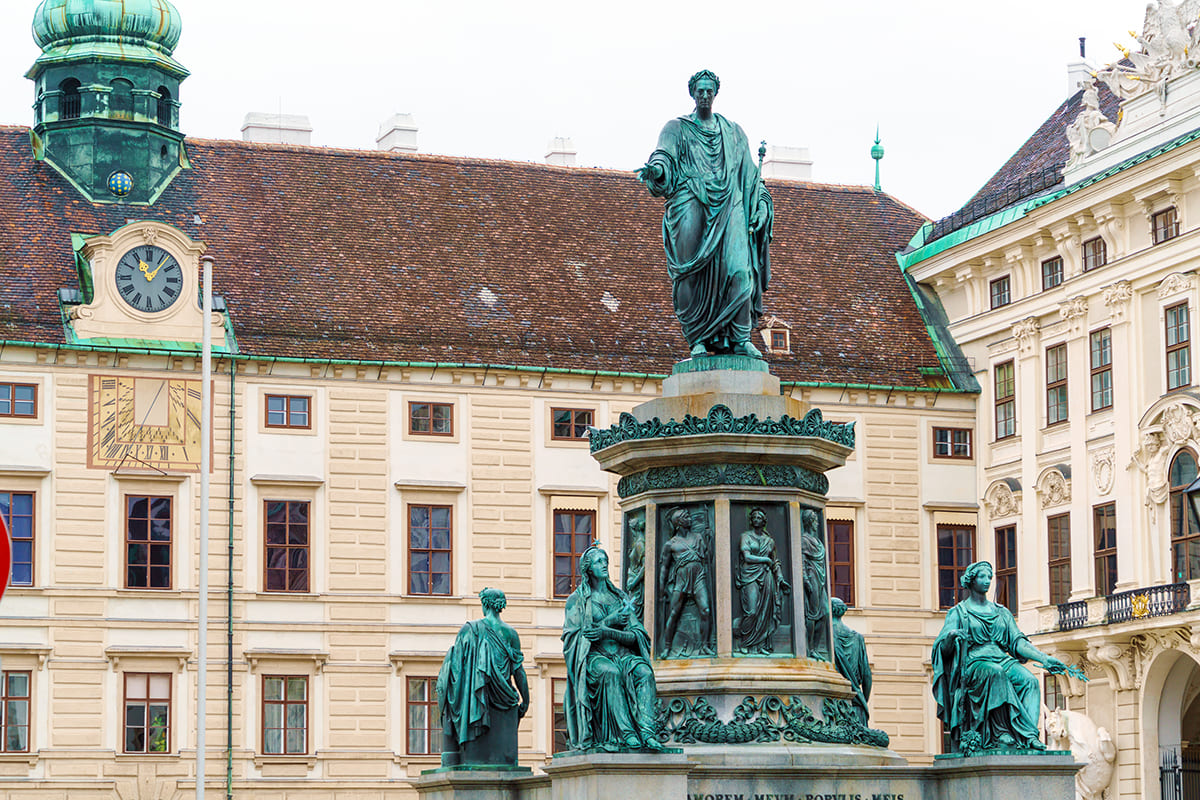
Hidden within the grand complex of the Hofburg Palace lies one of Europe’s most remarkable collections of royal treasures, the Imperial Treasury of Vienna (Kaiserliche Schatzkammer). This museum holds centuries of Habsburg wealth, faith, and political symbolism, gathered over nearly a millennium of empire. Each object tells a story of ambition, artistry, and divine rule, offering visitors a rare glimpse into the heart of imperial majesty.
The Imperial Crown of the Holy Roman Empire
The star of the collection is the Imperial Crown of the Holy Roman Empire, created in the late 10th or early 11th century and used for the coronations of medieval emperors. Set with sapphires, amethysts, and emeralds, the crown embodies divine authority and the continuity of imperial power. Its octagonal form and cross-topped arch reflect both political strength and deep religious symbolism. Seeing it up close offers a powerful glimpse into the ceremonial world of early European emperors.
The Austrian Imperial Crown and Regalia
Equally magnificent is the Austrian Imperial Crown, created in 1602 for Emperor Rudolf II. This masterpiece of goldsmithing is adorned with enamel, pearls, and precious stones. Alongside it are the Imperial Orb and Scepter, which later became the principal regalia of the Austrian Empire. Together, these objects embody centuries of Habsburg monarchy, power rendered in exquisite art.
The Burgundian Treasure
Among the most unique sections of the Treasury is the Burgundian Inheritance, which entered the Habsburg collection through marriage alliances in the 15th century. These include elaborate medieval tapestries, ceremonial armor, and relics of chivalric orders such as the Order of the Golden Fleece. Each item reflects the dynasty’s deep connection to European nobility and courtly traditions.
Religious Relics and Sacred Objects
Beyond crowns and jewels, the Treasury also houses one of the most significant religious collections in the world. Highlights include a relic believed to be a piece of the True Cross, a fragment from the Lance of St. Longinus, and ornate reliquaries that once accompanied emperors on holy processions. These artifacts reveal how faith and power were inseparably intertwined in Habsburg rule.
The Treasures of Everyday Empire
Not all objects in the Treasury are ceremonial; some reflect the refined tastes and material culture of the imperial court. Jeweled cups, exquisitely crafted vessels, and luxury textiles reveal the skill of the artisans who served the Habsburgs. Each room immerses visitors in the opulence and the strict formality that defined a dynasty ruling Europe for centuries.
Visiting the Imperial Treasury
The Imperial Treasury is located within the Swiss Wing (Schweizerhof) of the Hofburg Palace. Plan around one hour to explore its 21 exhibition rooms filled with dazzling history. For a smooth visit, you can secure your entry via the Hofburg Palace ticket page, which includes access to the Treasury and other sections of the imperial complex.
Stepping into Hofburg’s Imperial Treasury is like opening a time capsule of Europe’s royal past, a world where jewels symbolized kingdoms, relics inspired faith, and beauty was the language of power.