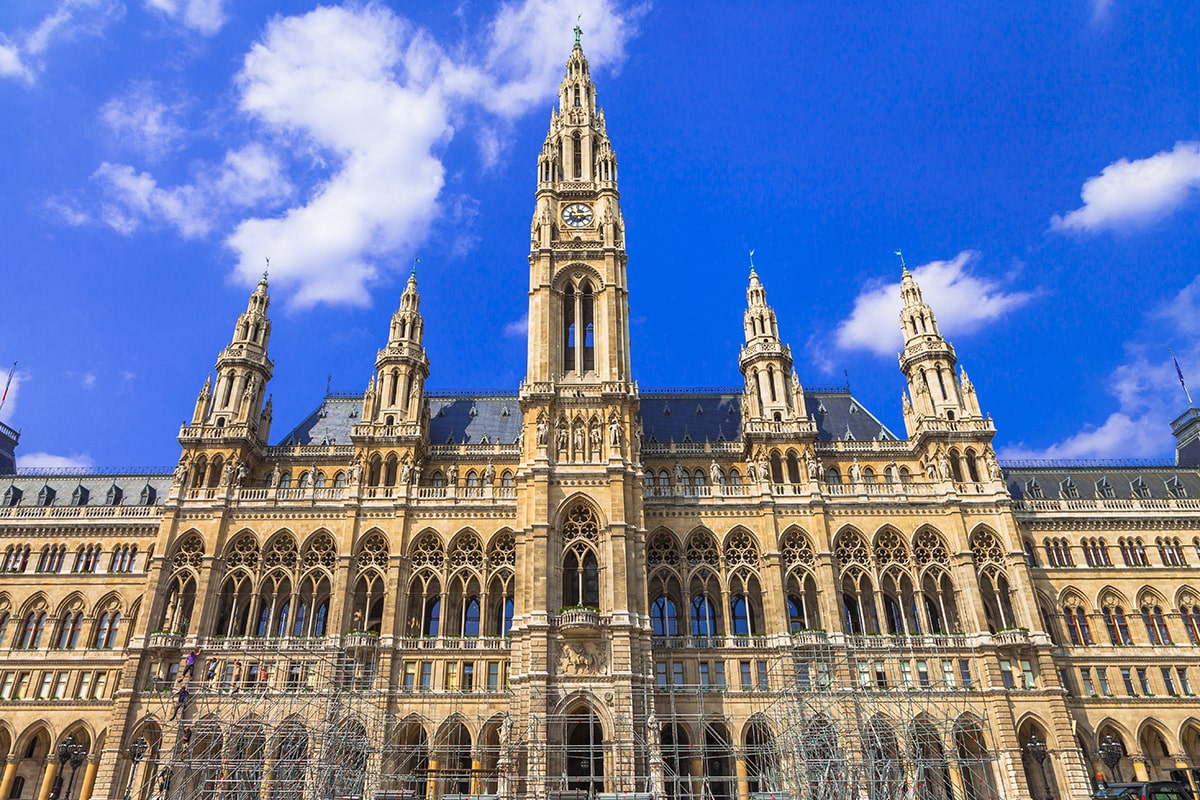
Vienna’s skyline tells the story of Europe’s artistic and cultural evolution. Over the centuries, the city has transformed from a medieval stronghold into an imperial capital of elegance and creativity. From the towering spires of Gothic cathedrals to the flowing curves of Rococo palaces, each architectural style marks a new chapter in Vienna’s remarkable history.
The Gothic Foundations
The Gothic era shaped Vienna’s earliest monumental buildings, most notably the St. Stephen’s Cathedral (Stephansdom). Built between the 12th and 15th centuries, its pointed arches, ribbed vaults, and towering south spire symbolize Vienna’s medieval spirit and enduring craftsmanship. The cathedral became not only a place of worship but also a civic symbol of resilience through fires, wars, and empire changes.
Renaissance Rationality and Early Baroque Splendor
As the Renaissance spread across Europe, Vienna began embracing symmetry, perspective, and proportion. Italian architects influenced the city’s noble residences and courtyards, emphasizing harmony over ornamentation. By the 17th century, the early Baroque period arrived, bringing a new sense of grandeur that reflected the power of the Habsburg monarchy.
Churches such as St. Peter’s Church and palaces within the Innere Stadt began to display domes, columns, and gilded interiors that celebrated divine order and imperial authority.
The Baroque Era: Vienna’s Golden Age
The 18th century marked Vienna’s full embrace of the Baroque style. Visionary architects like Johann Bernhard Fischer von Erlach and Johann Lukas von Hildebrandt designed monumental structures such as Schönbrunn Palace and Belvedere Palace. These masterpieces combined symmetry, drama, and light, transforming Vienna into one of Europe’s most visually spectacular capitals.
The Baroque aesthetic wasn’t limited to royal residences, it influenced gardens, fountains, and churches throughout the city. This was architecture as theater, designed to awe and inspire.
The Rococo Refinement
As the Baroque era softened into the 18th century’s later decades, the Rococo style brought a lighter, more playful elegance to Vienna. Interiors became more intimate, decorated with pastel colors, intricate stucco work, and ornate mirrors. The Rococo influence can still be admired in the State Rooms of Schönbrunn Palace and several aristocratic mansions around the city.
Where Baroque sought to impress, Rococo sought to delight, celebrating grace, beauty, and the pleasures of life in Austria’s age of enlightenment.
Vienna Today: A Living Architectural Museum
Modern Vienna blends all these styles into a single, harmonious experience. Walking through the city, you’ll pass from Gothic spires to Rococo halls, Neoclassical facades, and even Art Nouveau masterpieces. Each era has left its mark, creating a city that is as much a living museum as it is a vibrant capital.
You can explore many of these architectural icons by visiting Vienna’s royal palaces and museums, where centuries of art, design, and history continue to unfold before your eyes.
From Gothic grace to Rococo elegance, Vienna’s architecture is a timeless reflection of Europe’s artistic soul where history, beauty, and innovation coexist in perfect harmony.